WIth the release of the Oculus Rift DK1 we started to explore the possibilities and utilized the advantages to dive in immersive experiences.
KEY FACTS
- Consolidated work of 1 year at university
- First-of-a-kind to create unique workflows for VR content
- Future Award Media Price
- Work done in a team of 2
MY ROLE
- Technology, Movie & Games Research
- Data Processing Scripting, Storyboarding, 3D modeling & Motion Design
- Testing & creating case study experiences for the Oculus DK 1 & 2
- Developing systems to track various kind of data while being in VR
- Analyze and remix data to generate information graphics
TOOLS
- Hardware: Oculus DK1, DK2, Pulse Sensor, 5.1. Sound
- Storyboarding: Illustrator
- Baked Enviroment: Cinema 4D, V-Ray & After Effects
- Realtime Environment: Maya & Unreal Engine
- Data Work: Python & Processing
Cinema 4D creates 3D content for Oculus Rift
'Oculus Rift is one of the most important new innovations for the media sector.
Students Nguyen (Kenji) Duong and Felix Droessler are tapping this market and are using Cinema 4D to create interactive content.‘
– Maxon, Creator of CINEMA4D
CONCEPTING
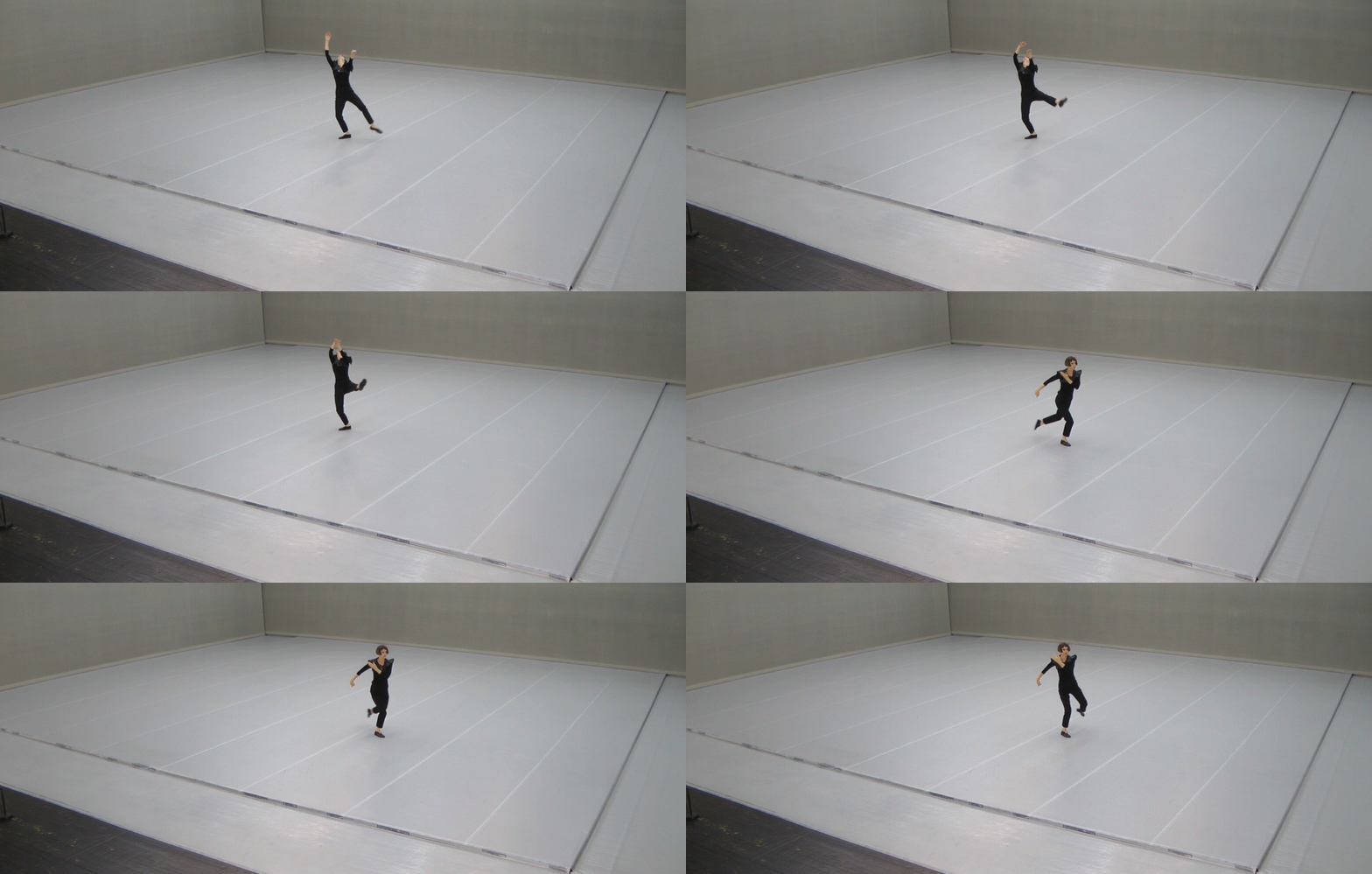
Our planned VR application was based on Motion Bank, which is a project by Wiliam Forsythe, who is a well-known choreographer, the Frauenhofer IDG, and HFG Offenbach. They let different dancers perform to the score ’no time to fly‘ by Deborah Hay and collected about 4 terabytes of tracking data.
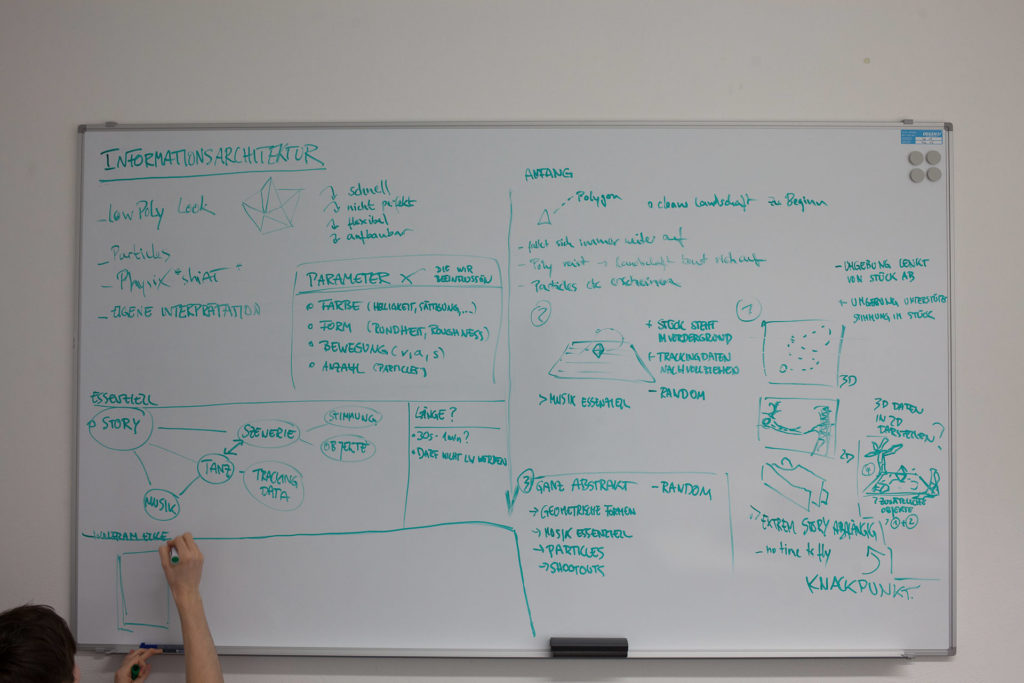
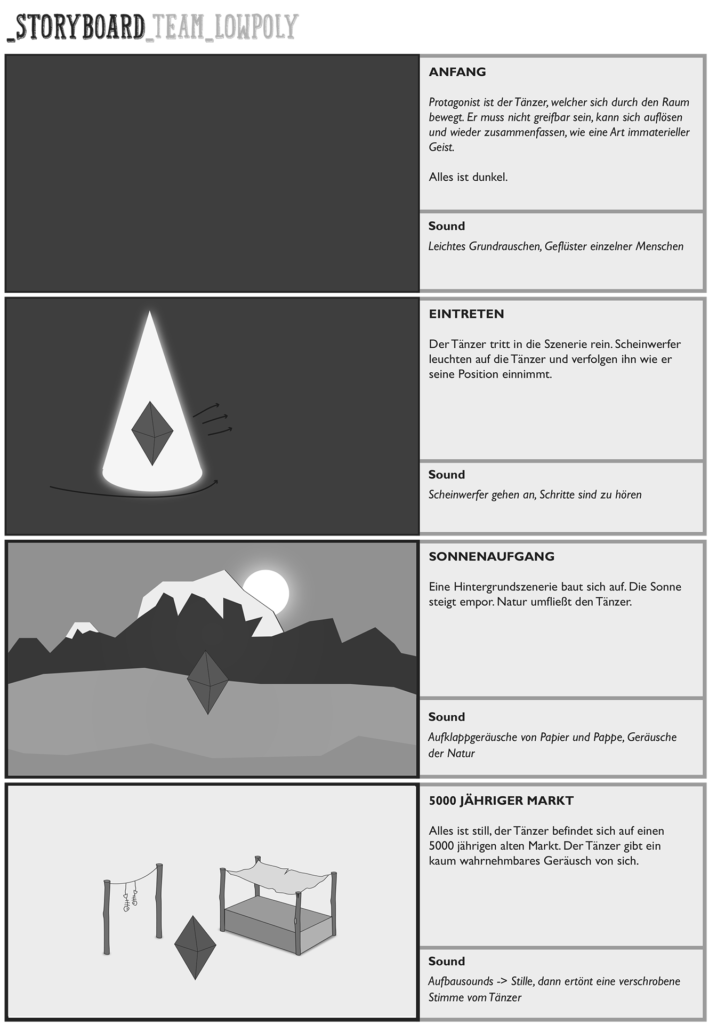
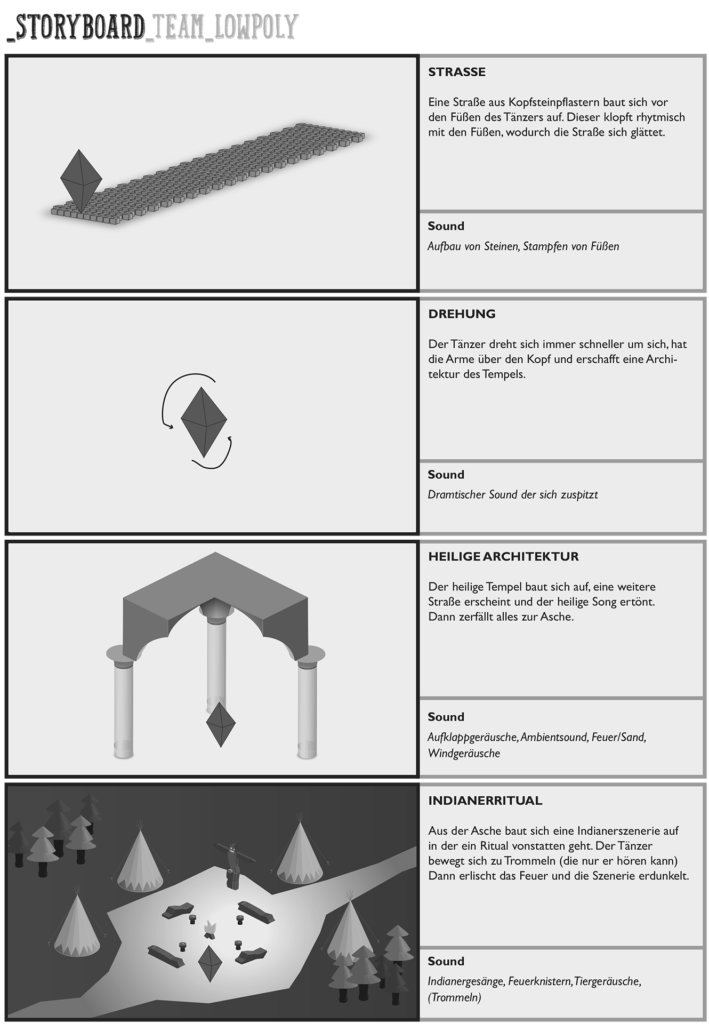
In our translation, we primarily focused on the moods that described the scenes. We picked up 3 scenes and interpreted them in our way for the visualization.
RESEARCH & TESTING
How do we create content for the Oculus DK1? As the technology was quite new and secret recipe for content creation yet, we did some testing and found a solution to transfer self made visuals to VR.
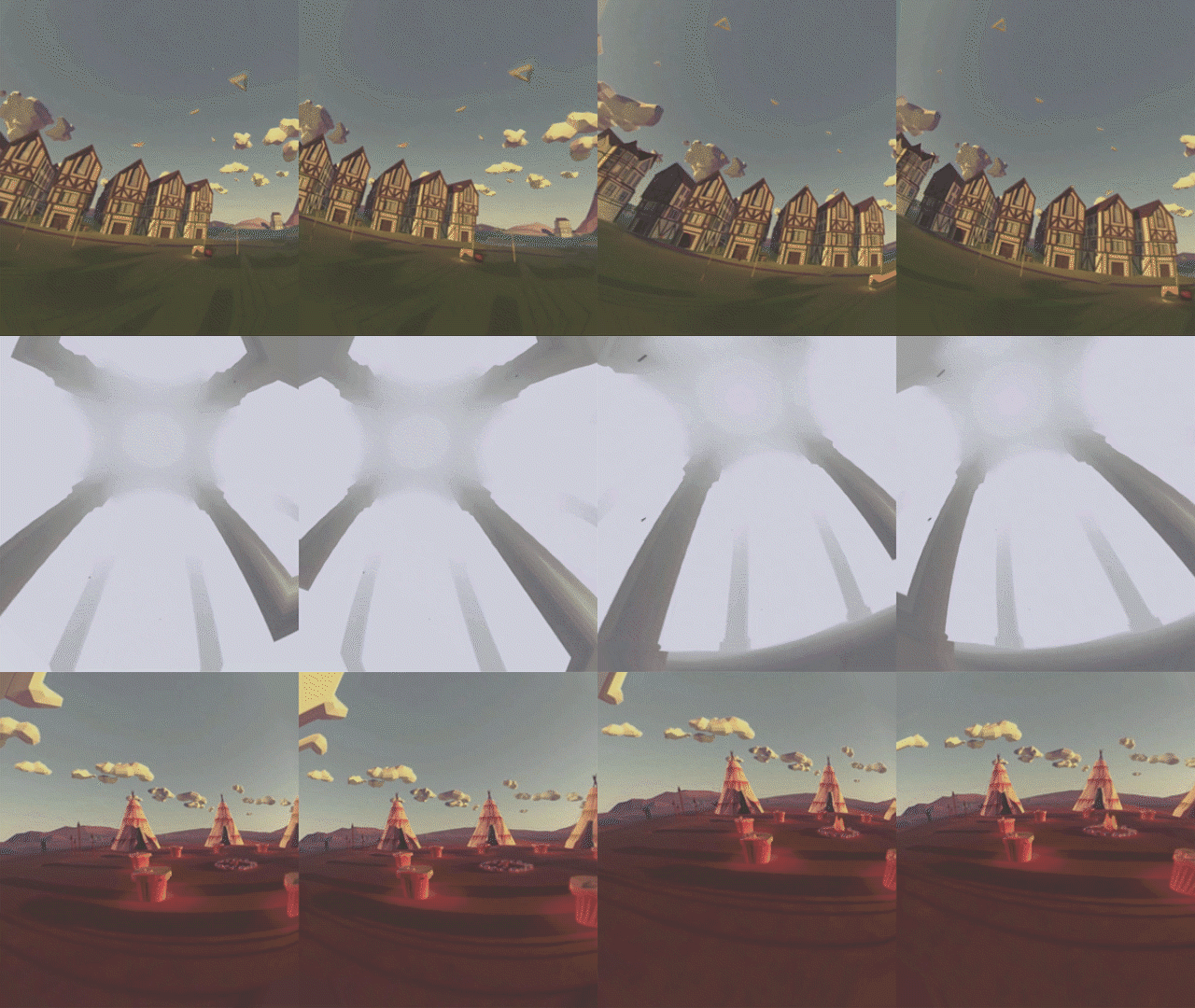
With help of a 360° mapping tool and integrated head tracking we just needed to test ideal settings for the stereoscopic cameras in our scenes. Exporting those 2 perspectives with a 360° rendered and remapping them in After Effects opened us the gate for VR.
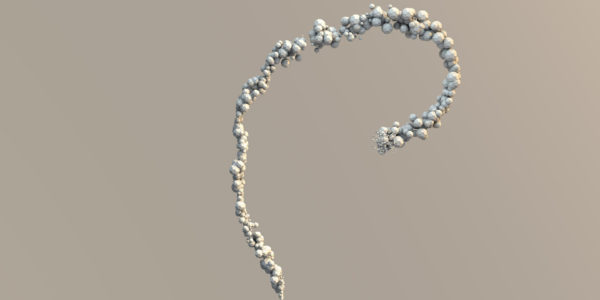
Our first motion data visualizations
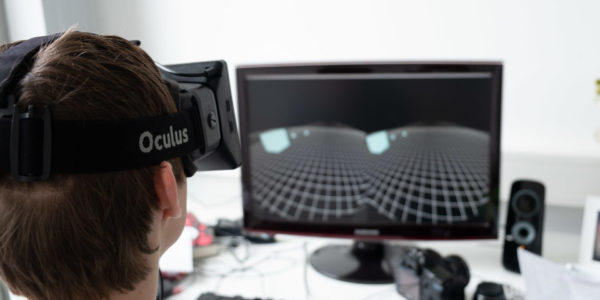
360° panorama tests with the Oculus
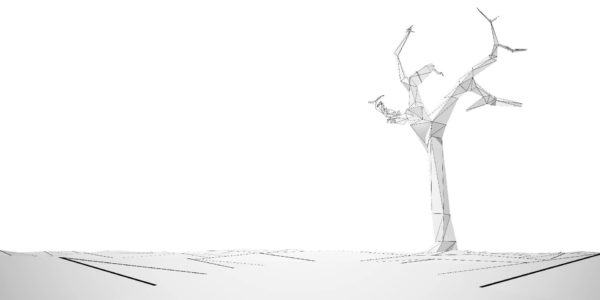
research for visual style
KEY VISUALS
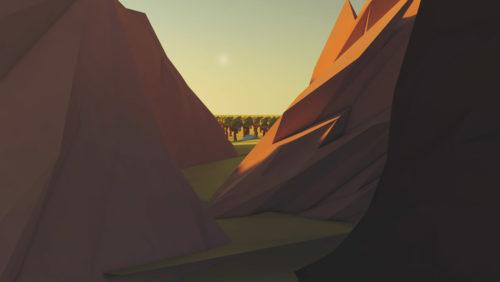
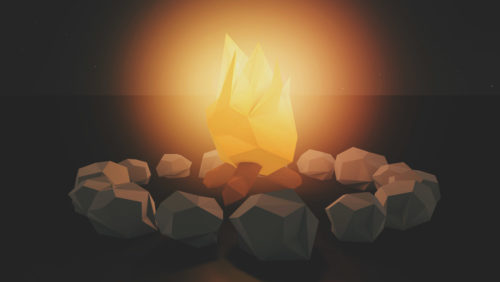
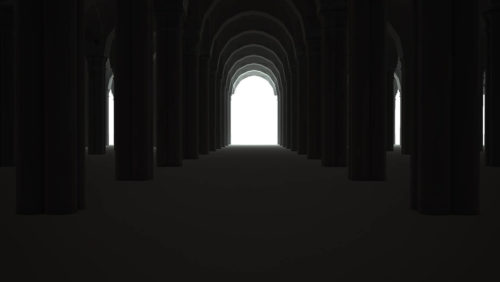
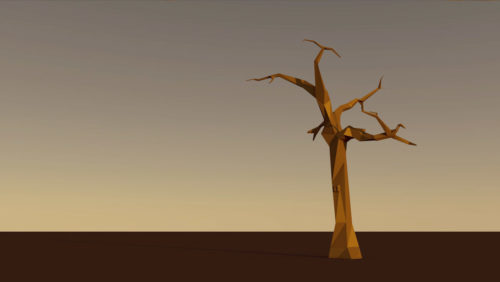
We created different key visuals in CINEMA4D and Photoshop to get a look and feel for our application.
ANIMATION & COMPOSITING
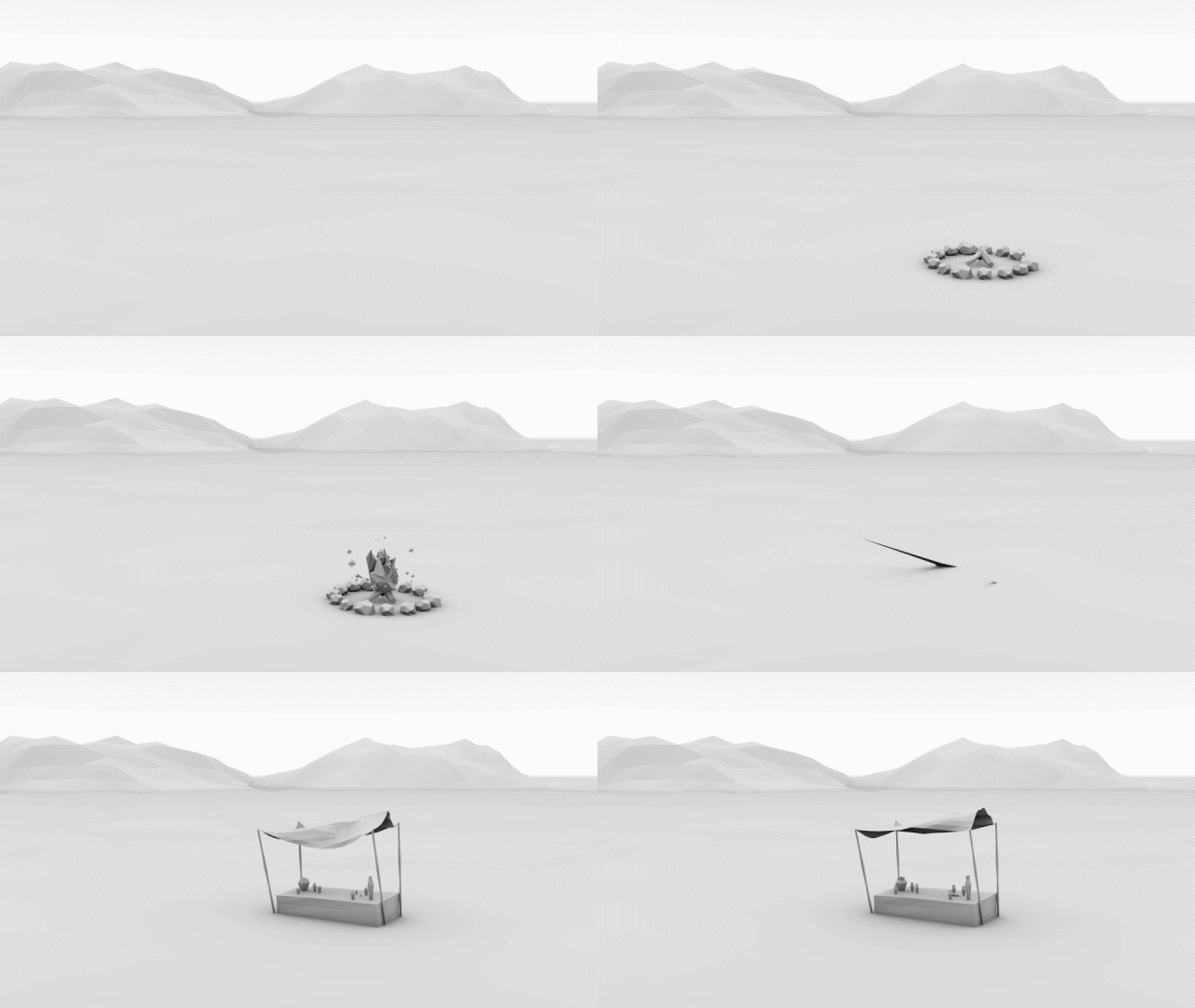
We also used CINEMA4D to build and animate our world. It took quite a long time to model these objects and texture them, but in the end, we got a pretty decent result. The tracking data was imported with a self-written Python script, which affected the position, movement, and other parameters like particle systems or physical calculations of our objects. For the rendering, we used VRAY, because it allows the possibility to create a spherical panorama without any intermediate steps. Two cameras with about 8 centimeters offset were exported to create a stereoscopic 3D
A 5.1. sound system which got placed in the room helped us to top up the immersive experience with Sound Design.
Fortunately, displaying the movie inside the Oculus Rift wasn’t a problem at all; the VR Player by Stéphane Lévesque handles this task easily.
Thanks to the Frauenhofer IDG, HFG Offenbach, Wiliam Forsythe & of course our University Hochschule Hof for the opportunity to be part of such a complex and rewarding project!